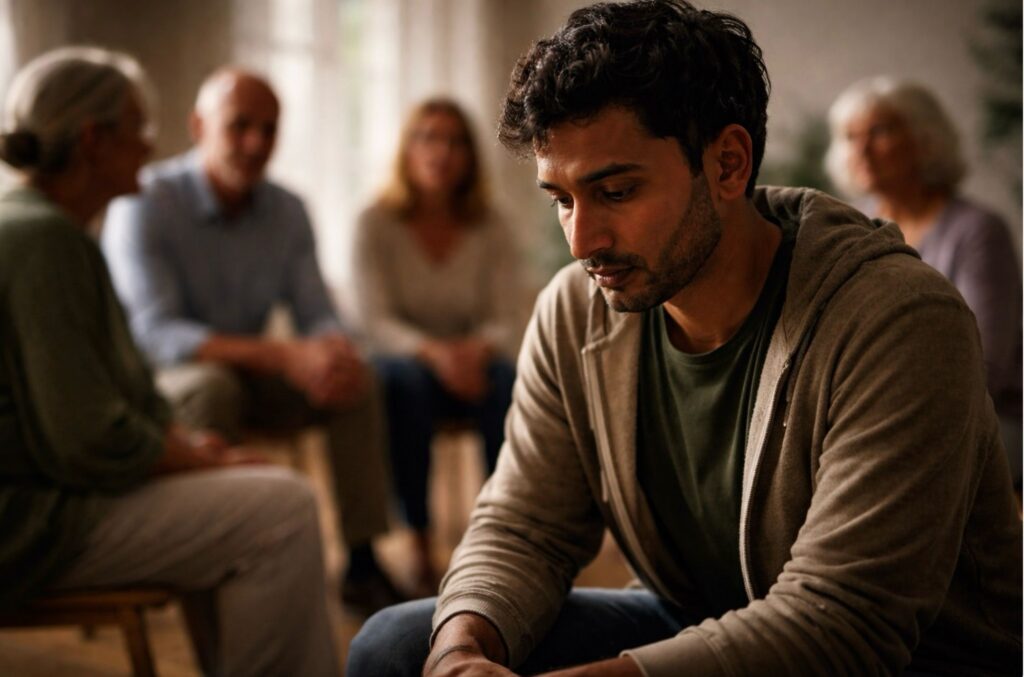
Kartik is a PhD scholar—a brown Indian man from caste marginalized background —who participates in an international ACG group that is largely white. He is thoughtful, engaged, and politically awake. And yet, a pattern has been showing up around him.
Whenever someone in the group cries, Kartik withdraws. He looks restless, bored, sometimes agitated. When invited in, he names it directly: he doesn’t relate to tears. For him, 𝘀𝗶𝘁𝘁𝗶𝗻𝗴 𝘄𝗶𝘁𝗵 𝗽𝗲𝗿𝘀𝗼𝗻𝗮𝗹 𝗽𝗮𝗶𝗻 𝗳𝗲𝗲𝗹𝘀 𝗹𝗶𝗸𝗲 𝗮 𝗽𝗿𝗶𝘃𝗶𝗹𝗲𝗴𝗲. The world is on fire, he says—we need systemic change. Sitting and crying, over personal issues is luxury that he can’t connect with.
The group doesn’t take this well. Some members grow angry. Others accuse him of being insensitive or emotionally bypassing. The atmosphere tightens around him, and Kartik retreats further.
I don’t intervene immediately. I watch the dynamic form—the group moralising emotional expression, Kartik hardening in response. Then I gently turn toward him and remind him of something he had shared earlier.
He had spoken about being bullied at school for his thin, dark brown body. He had said there was no space for his pain then. No one came when he was hurt. He learnt to be indifferent
Staying close to that memory, I wonder aloud whether what he experienced as “just bullying” might also have been shaped—quietly, invisibly—by caste, class, body and difference, even if he hadn’t named it that way.
I linked it to the present moment: this group is largely white, comfortable with a certain kind of vulnerability. I ask whether he might once again be feeling invisible, or pressured to adapt to an emotional culture that never had space for the life he lived
Something shifts.
Kartik goes quiet. He had understood his story as individual pain and personal coping. He hadn’t seen how a system shaped his nervous system. Slowly, he says that crying once only brought ridicule, not care. He also names how alien the softness in the room sometimes feels.
The group softens— because they finally see what’s happening. This isn’t about coldness or superiority. It’s about whose pain gets held and whose is expected to toughen up.
Kartik stays. And quietly says, “I think I’m angry at a world where some pain is honoured, and some pain is told to move on.”
That was the work.
If this story stayed with you, I want to invite your curiosity:
✅ Which kinds of pain do you instinctively meet with softness?
✅ What were you taught to do with pain—cry, endure, act, disappear?
✅ How do caste, class, race, and gender shape which responses are valued?
Inclusion isn’t only about who is present.
It’s also about which forms of pain and survival are allowed to belong.
There are a 𝗳𝗲𝘄 𝗼𝗽𝗲𝗻𝗶𝗻𝗴𝘀 𝗶𝗻 𝗺𝘆 𝗙𝗿𝗶𝗱𝗮𝘆 𝗔𝗖𝗚 𝗴𝗿𝗼𝘂𝗽 right now.
If this way of working speaks to you, you’re warmly welcome to reach out.