
For years, she tried to win her mother-in-law’s approval.
Cooking the right dishes.
Saying the right things.
Being available. Agreeable. Impeccable.
The more she did, the more subtle rejection she felt.
A comment here. A comparison there. Silence where she longed for warmth.
And yet — she tried harder.
What she couldn’t see:
Her relationship with her mother-in-law wasn’t really about her. It was actially a wonded part from the past seeking healing in a convoluted way.
She had grown up estranged from her own mother.
Her mother valued excellence. She responded with defiance.
She refused to comply, refused to soften, refused to “be enough.”
So a fantasy formed:
“𝗜𝗳 𝗜 𝗰𝗮𝗻 𝗯𝗲 𝘁𝗵𝗲 𝗽𝗲𝗿𝗳𝗲𝗰𝘁 𝗱𝗮𝘂𝗴𝗵𝘁𝗲𝗿-𝗶𝗻-𝗹𝗮𝘄… 𝗜 𝘄𝗶𝗹𝗹 𝗳𝗶𝗻𝗮𝗹𝗹𝘆 𝗽𝗿𝗼𝘃𝗲 𝗜 𝗮𝗺 𝗴𝗼𝗼𝗱.”
But what unfolded?
With her mother — she opposed.
With her mother-in-law — she over-adapted.
Different roles. Same script.
Through 𝗧𝗿𝗮𝗻𝘀𝗮𝗰𝘁𝗶𝗼𝗻𝗮𝗹 𝗔𝗻𝗮𝗹𝘆𝘀𝗶𝘀, she saw the pattern.
She had never really been in relationship with either woman.
With one, she rebelled.
With the other, she pleased.
Both responses were predictable.
Both kept the dance alive.
In TA, we call this 𝗰𝗼𝗺𝗽𝗹𝗲𝗺𝗲𝗻𝘁𝗮𝗿𝘆 𝘁𝗿𝗮𝗻𝘀𝗮𝗰𝘁𝗶𝗼𝗻 — interactions that continue smoothly, even when they hurt.
Nothing changes because both people stay in familiar roles.
When she began to respond differently — not from rebellion, not from pleasing, not from the need to prove — something shifted.
She paused.
She stopped over-explaining.
She didn’t rush to earn approval.
She didn’t withdraw in protest.
There was confusion. Discomfort. Resistance.
Because the old dance was interrupted.
In TA, this is called 𝗰𝗿𝗼𝘀𝘀𝗶𝗻𝗴 𝗮 𝘁𝗿𝗮𝗻𝘀𝗮𝗰𝘁𝗶𝗼𝗻 — changing the pattern so the old script cannot continue.
And that is where freedom begins.
For the first time, she wasn’t compensating or resisting.
She was relating as an adult woman.
We cannot keep engaging in the same patterns and expect different outcomes.
Sometimes, one different response is enough to interrupt a script written decades ago.
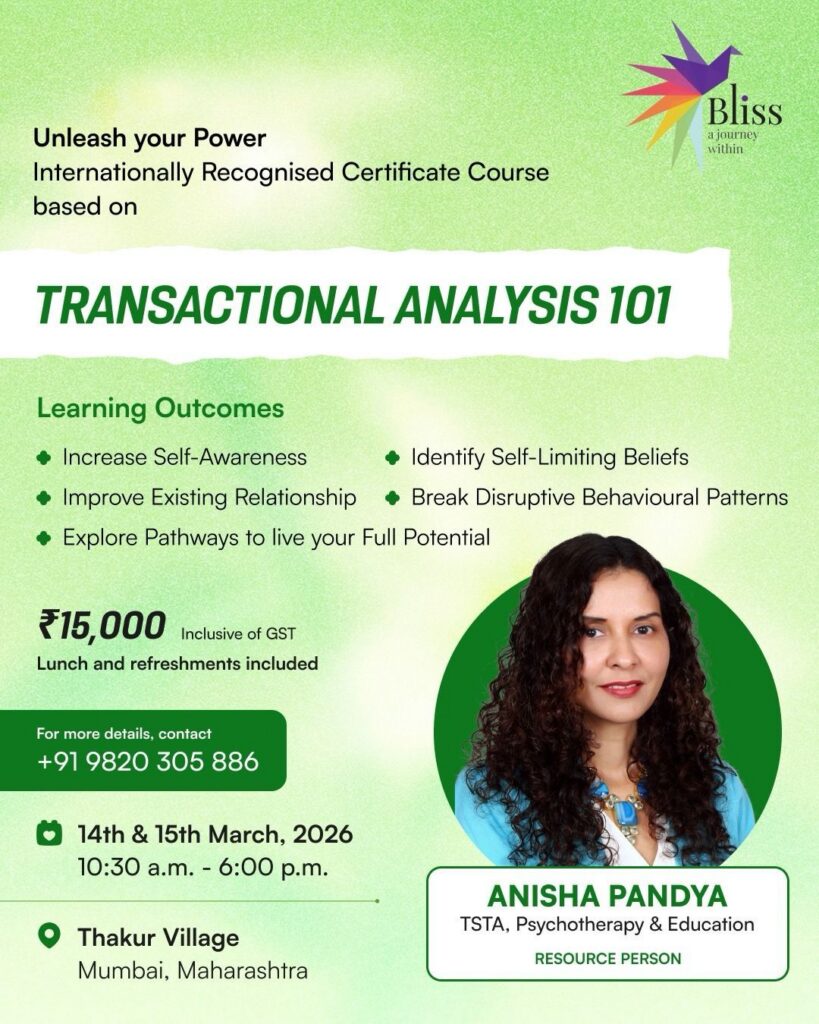
This is what my upcoming TA 101 – Introduction to Transactional Analysis offers.
You will learn to:
• Recognise the patterns you fall into under stress
• Understand repetitive relational dynamics
• See the invisible dance in real time
• Create choice instead of automatic reaction
𝗜𝗳 𝘆𝗼𝘂’𝘃𝗲 𝗲𝘃𝗲𝗿 𝗮𝘀𝗸𝗲𝗱,
“𝗪𝗵𝘆 𝗱𝗼𝗲𝘀 𝘁𝗵𝗶𝘀 𝗸𝗲𝗲𝗽 𝗵𝗮𝗽𝗽𝗲𝗻𝗶𝗻𝗴 𝗶𝗻 𝗺𝘆 𝗿𝗲𝗹𝗮𝘁𝗶𝗼𝗻𝘀𝗵𝗶𝗽𝘀?”
𝗧𝗔 𝟭𝟬𝟭 𝘄𝗶𝗹𝗹 𝗴𝗶𝘃𝗲 𝘆𝗼𝘂 𝘁𝗵𝗲 𝗺𝗮𝗽.
Because awareness creates choice.
And choice changes patterns.
-Written By Anisha Pandya