Our story didn’t begin with a shared vision.
It began with a misunderstanding.
We had met online to discuss an article we were co-authoring.
One of us (Anisha) had just come from a conversation with an American client where she experienced microaggression and micro-insult around her racial identity.
She entered the call still stirred by that encounter.
The other (Giles) listened with care, offered empathy, and then—perhaps too soon—wondered aloud whether the intent had really been racial.
That moment could have been the end of the conversation.
But instead, it became the beginning of something deeper.
What followed wasn’t smooth—it was alive.
We stumbled into the very terrain we both cared about:
how race, class, culture, and history shape what we feel safe naming;
how even empathy can sometimes carry unconscious hierarchy;
how power and care must learn to coexist in the same room.
Through many such conversations—sometimes messy, often humbling—we discovered a shared practice of staying present when it would be easier to retreat.
And from that practice, 𝗟𝗶𝘃𝗶𝗻𝗴 𝗘𝗾𝘂𝗮𝗹𝗶𝘁𝗶𝗲𝘀 𝘄𝗮𝘀 𝗯𝗼𝗿𝗻.
It’s a partnership that integrates 𝗡𝗼𝗻𝘃𝗶𝗼𝗹𝗲𝗻𝘁 𝗖𝗼𝗺𝗺𝘂𝗻𝗶𝗰𝗮𝘁𝗶𝗼𝗻 (𝗡𝗩𝗖), 𝗗𝗶𝘃𝗲𝗿𝘀𝗶𝘁𝘆, 𝗘𝗾𝘂𝗶𝘁𝘆 & 𝗜𝗻𝗰𝗹𝘂𝘀𝗶𝗼𝗻 (𝗗𝗘𝗜), 𝗮𝗻𝗱 𝗧𝗿𝗮𝗻𝘀𝗮𝗰𝘁𝗶𝗼𝗻𝗮𝗹 𝗔𝗻𝗮𝗹𝘆𝘀𝗶𝘀 (𝗧𝗔) to help schools and organisations shift from domination to partnership cultures—
where people don’t just understand equality, they live it.
We work with communities ready to explore not just what inclusion looks like, but what it feels like—in language, in leadership, and in everyday interactions.
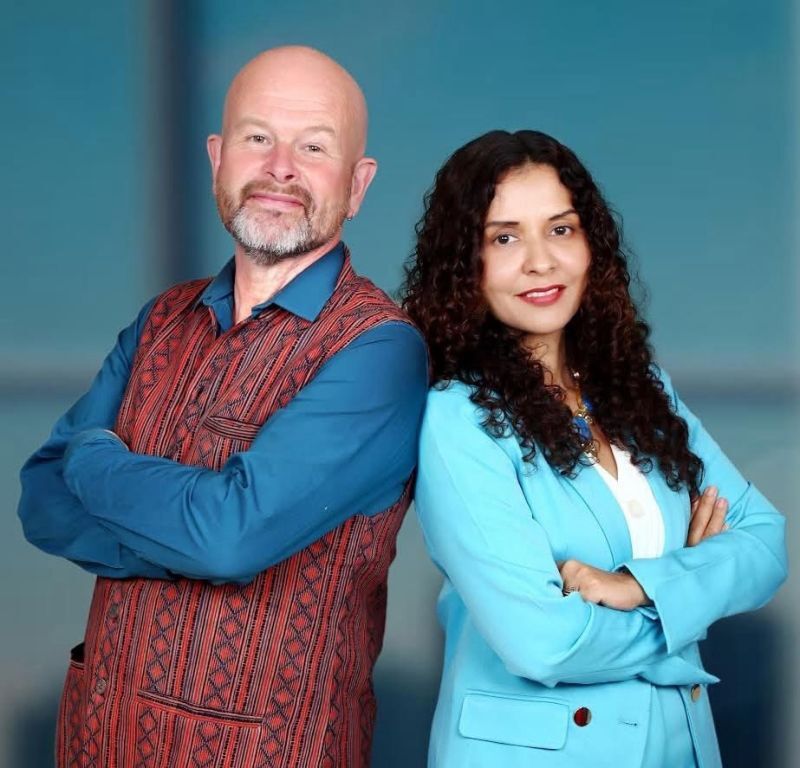
We are 𝗮 𝗯𝗿𝗼𝘄𝗻, 𝗜𝗻𝗱𝗶𝗮𝗻 𝘄𝗼𝗺𝗮𝗻 𝗮𝗻𝗱 𝗮 𝘄𝗵𝗶𝘁𝗲, 𝗕𝗿𝗶𝘁𝗶𝘀𝗵 𝗺𝗮𝗻, from different generations, different worlds, and different wounds.
Our differences don’t dissolve in the work—they deepen it.
Our partnership is not built on sameness but on practice—
of staying in dialogue when it’s uncomfortable,
of turning friction into learning, and of discovering how empathy and truth can coexist.
This is not tidy work. It’s not about being nice. It is about learning how to stay present when privilege, power and pain enter the room together. Again and again, we see what becomes possible
when difference stops being a problem to fix
and becomes a relationship to nurture.
Welcome to Living Equalities — 𝘄𝗵𝗲𝗿𝗲 𝗰𝗵𝗮𝗻𝗴𝗲 𝗯𝗲𝗴𝗶𝗻𝘀 𝗶𝗻 𝘁𝗵𝗲 𝘀𝗽𝗮𝗰𝗲 𝗯𝗲𝘁𝘄𝗲𝗲𝗻 𝘂𝘀.
— Anisha Pandya & Giles Barrow